Thinking about turning your Vicksburg basement into a bedroom or cozy hangout? Before you cut into the foundation, make a plan that protects your safety, your budget, and your resale value. Egress rules and drainage details matter, and local permits are part of the process. In this guide, you’ll learn what Vicksburg homeowners should know about code basics, permits, costs, and common pitfalls so your project passes inspection and performs well for years. Let’s dive in.
Why planning comes first
Cutting a new opening in a foundation is a structural change. Done right, it adds livable space and buyer appeal. Done wrong, it can cause leaks, damage, and inspection issues at resale. Start by confirming permit requirements and who inspects your address with the Village of Vicksburg office. You can call Village Hall at 269-649-1919 or use the village’s contact page to get the current permit steps and forms. Visit the Village contact page at Village of Vicksburg contact.
Michigan enforces emergency escape and rescue opening rules for basements with habitable space and for every sleeping room. You should verify the code edition in effect and any local amendments with the building official. Review the state rule text here: Michigan Administrative Code R. 408.30421.
When egress is required
If your basement will have habitable space or a sleeping room, at least one operable emergency escape and rescue opening is required. If there are bedrooms, each bedroom typically needs its own compliant opening. Confirm exceptions with the local official using the state rule above.
Size and height basics
Inspectors check the clear opening you can actually crawl through, not the glass size. Key dimensions often include:
- Minimum net clear opening area: 5.7 sq ft (some grade-floor openings may allow 5.0 sq ft, depending on code edition).
- Minimum clear height: 24 inches. Minimum clear width: 20 inches.
- Maximum finished sill height: 44 inches above the interior floor.
For a practical summary of opening measurements, review this guide: egress window size basics.
Wells, ladders, covers, and drainage
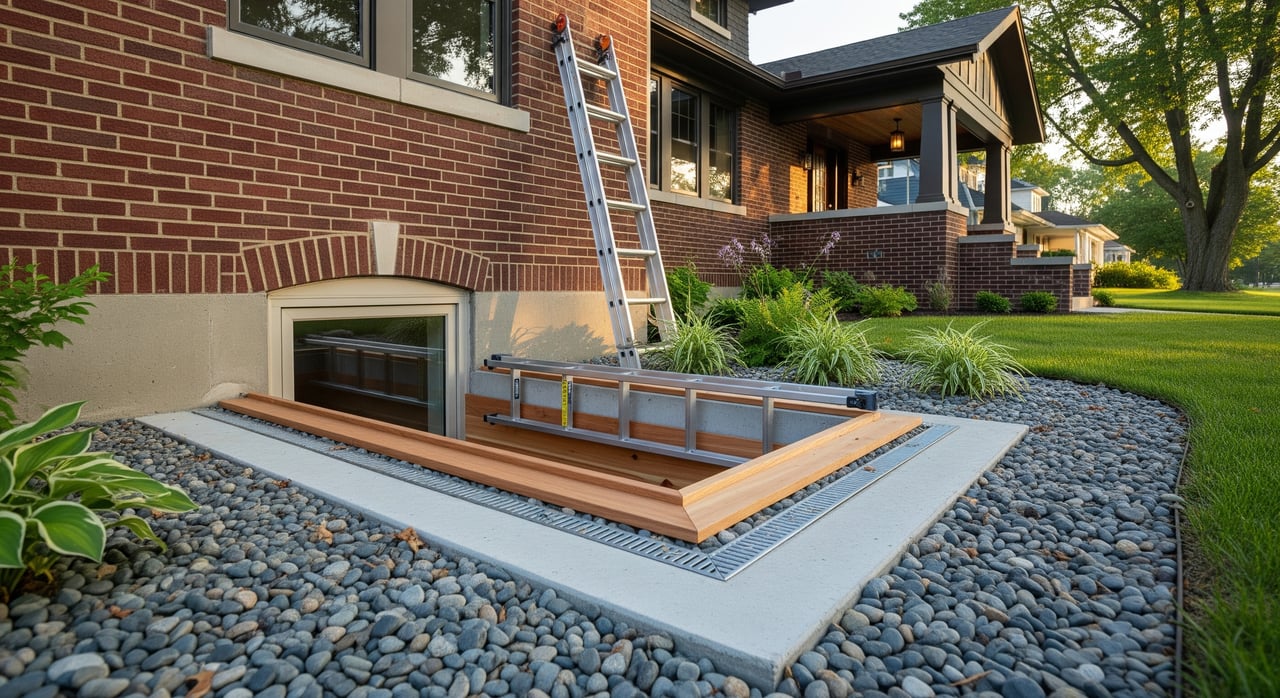
If the window is below grade, a window well is required. Common checks include:
- Well size: at least 9 sq ft with 36 inches minimum projection and width so the window can open fully. See a clear summary of well and ladder rules here: window well and ladder requirements.
- Ladder or steps: required when well depth exceeds 44 inches.
- Covers, bars, grilles: allowed only if they do not reduce the required opening and can be released from inside without keys or tools. Learn more here: cover and release requirements.
- Drainage: wells should drain to the footing drain or another approved outlet unless your soils are documented as well drained. Poor drainage is a top cause of basement leaks. See this overview: window well drainage guidance.
Vicksburg permits and who to call
Start with Village Hall to confirm who issues permits and conducts inspections for your property inside the Village. Contact the village here: Village of Vicksburg contact. If referred to a regional authority, you may be directed to the Kalamazoo Area Building Authority. Their contact info is here: KABA contact.
Ask the office:
- Is a permit required to cut a foundation and install an egress window at this address?
- What plans are required for review (dimensioned window and well, structural details or engineer letter, drainage plan, contractor license information)?
- What are the inspection stages and how do I schedule them?
For forms and submittal expectations, check the building and inspections downloads.
What to include in your permit package
- A dimensioned plan showing window size, sill height, and window well dimensions.
- A drainage plan that ties the well to the footing drain or approved discharge.
- Structural details for headers or reinforcement if needed.
- Contractor license info and a clear scope of work.
Construction scope and best practices
Cutting a foundation is routine work for qualified teams, but it is not a simple DIY project.
- Structural support: Many openings need a steel lintel or engineered header to carry loads. When in doubt, involve a structural engineer. Learn why here: structural considerations for egress.
- Waterproofing and drainage: Confirm the drain tie-in before backfill, flash and seal the opening, and backfill with clean, washed stone so water moves away. See drainage guidance above.
- Wells, ladders, and covers: Make sure ladders do not block the window’s swing and that any cover can be removed from the inside without tools.
Common inspection failure points to avoid:
- No permit or missing plan review for a structural change.
- Measuring the glass, not the clear opening after the window operates. See egress window size basics.
- Sill height over 44 inches or a well too small to open the window fully.
- No well drainage or missing ladder where required.
- Covers that need keys or tools to open.
Budget and timeline
Costs vary with foundation type, excavation access, drainage, and finishes. Homeowners often report a total range from a few hundred to several thousand dollars for a single egress window. Permit fees commonly add tens to a few hundred dollars. Engineering can add several hundred to over a thousand if required. For a helpful overview, see this cost guide: egress window cost factors. Expect several days on site once work begins, plus added time for engineering and permit review.
Quick checklist before you cut
- Confirm the permit authority and required submittals with the Village of Vicksburg at Village of Vicksburg contact.
- Get a written scope showing window and well dimensions, sill height, and a drainage plan.
- Secure structural details or an engineer letter if reinforcement is needed. See structural considerations for egress.
- Verify well drainage and the plan to tie into the footing drain or other approved outlet. Review window well drainage guidance.
- Plan the inspection milestones and confirm how to schedule them.
Thinking about resale
A compliant egress opening can make a basement bedroom count as a sleeping room under current code, which supports buyer confidence and appraisal outcomes. If a basement bedroom lacks a compliant opening, it is generally not recognized as a sleeping room under Michigan rules. Review the state text here: Michigan Administrative Code R. 408.30421.
Ready to talk through your options before you list or buy? Get condition-aware advice that fits Vicksburg’s rules and today’s market. Reach out to Rob Humphries for calm, practical guidance from an inspection-trained local REALTOR.
FAQs
Do Vicksburg basements need an egress window for a bedroom?
- If your basement includes a sleeping room, a compliant emergency escape and rescue opening is typically required under Michigan rules; confirm details with the local building official using R. 408.30421.
What are the minimum egress window sizes in Michigan?
- Many code editions require a minimum net clear opening of 5.7 sq ft (5.0 sq ft at grade in some editions), 24 inches minimum height, 20 inches minimum width, and a sill no higher than 44 inches; see this practical summary: egress window size basics.
How big does a window well need to be?
- A common standard is at least 9 sq ft of area with a 36-inch minimum projection and width, plus a ladder if the well is deeper than 44 inches; see window well and ladder requirements.
Are covers allowed over egress wells in Michigan?
- Yes, covers are allowed if they do not reduce the required opening and can be removed from inside without keys or tools; review cover and release requirements.
Who issues permits for egress windows in Vicksburg?
- Start with the Village of Vicksburg at Village of Vicksburg contact to confirm whether the Village or a regional authority like KABA handles your address and to get permit forms and inspection steps.